2020年9月23日星期三

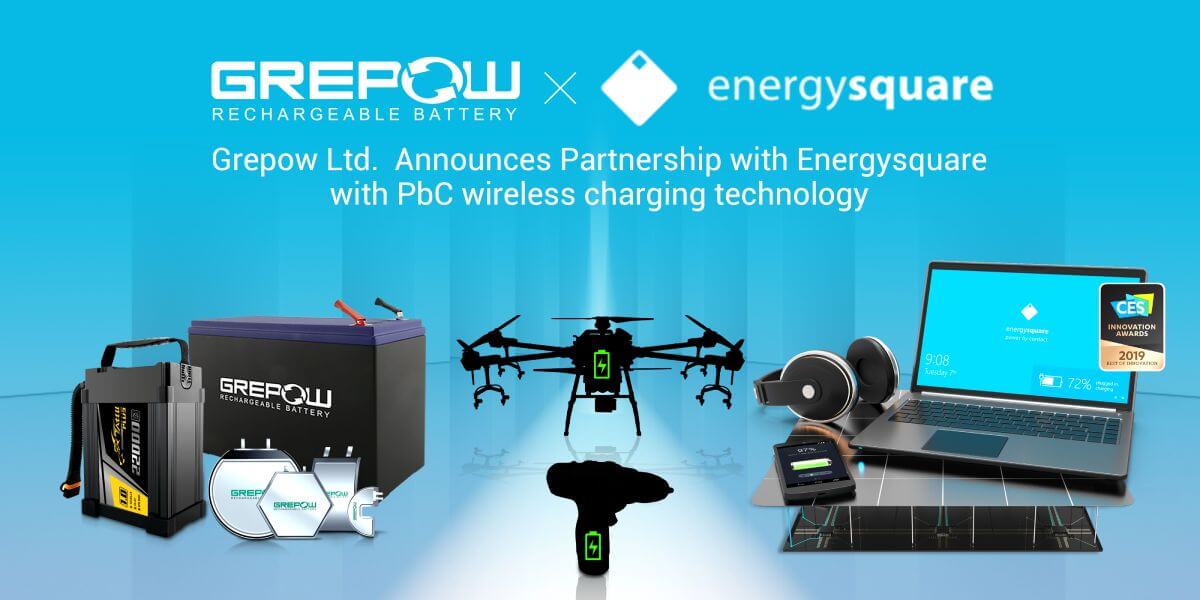
Grepow Ltd. Announces Partnership with Energysquare with PbC® contact-based wireless charging technology

 Shenzhen, China - September 21, 2020 - Shenzhen Grepow Battery Co., Ltd. (Grepow), a leading battery design and customization company, announced a partnership with French company EnergySquare to further develop the breakthrough Power by Contact (PbC) wireless-charging technology.


Grepow and EnergySquare are working together to develop a battery embedded into Power by Contact. This new solution will unlock the myriad of possibilities for fast and efficient wireless charging in electronic devices for the workspace, commercial, industrial and medical industries, powertools, and drones.

Grepow Ltd. Announces Partnership with Energysquare with PbC? wireless charging technology


“We are pleased to announce that Grepow and EnergySquare are now officially partners," said Peter Liu, CEO of Grepow Ltd. “We will be able to provide customers a conductive wireless charging solution with Grepow's battery and with the same charging efficiency as cable charging. It can achieve a synergy effect where 1+1 is greater than 2.”


Peter pointed out that the core purpose of Grepow Ltd. is to become the most comprehensive power-solution supplier in the world﹣and the future is the world of wireless charging solutions. With the PbC technology, charging your device does not require cumbersome, manual removal of the battery or charging cable. Instead, the wireless connection allows for more convenience and even minimizes the investment of personnel in industrial scenarios to achieve ultimate full automation.


“This strategic partnership with Grepow is a key milestone for seamless integration of Power by Contact technology in electronic devices. We are pleased and honored to develop a solution that will bring ergonomics and a better charging experience to electronic device users with Grepow, global leader in battery technology. In recent years, energy-saving products and technology became a top priority for corporations and consumers, this is the reason why Energysquare is proud to bring the best energy efficiency to the wireless charging market.” said Timothée Le Quesne, CEO of Energysquare.


About EnergySquare


Energysquare, a French company founded in 2015, is developing the new wireless charging technology "Power by Contact". Unlike inductive charging technologies on the market, Power by Contact allows the wireless charging of several devices simultaneously, at the same speed as a conventional charger, at high power and without energy loss. The company, which has a large portfolio of international patents developed with France Brevets, sells licenses of this French technology to international electronic device manufacturers. Energysquare was awarded Best of Innovation at CES 2019.


Power by Contact technology
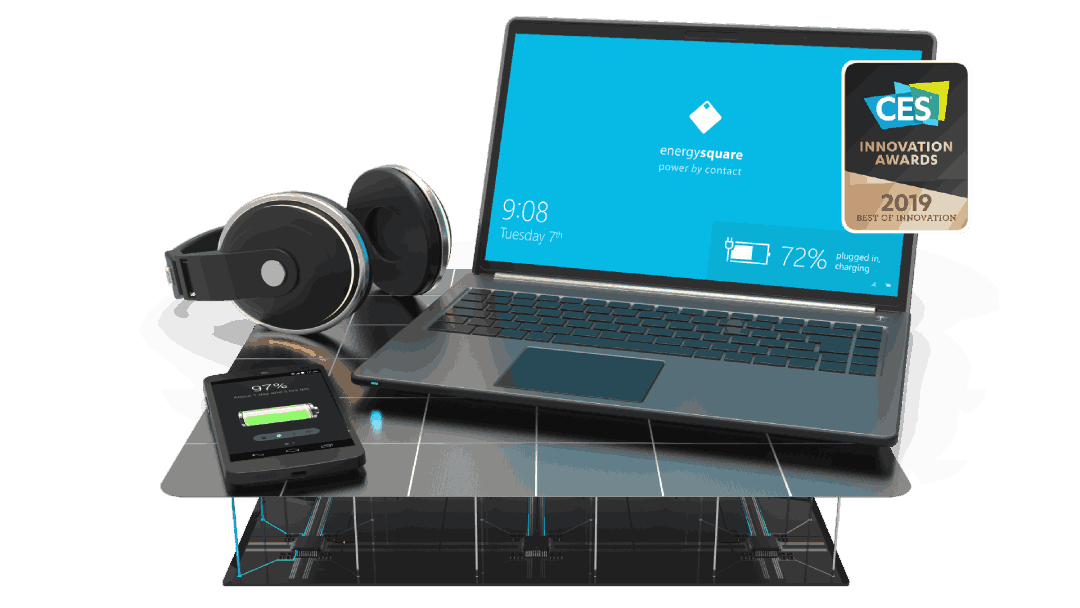

EnergySquare PbC wireless charging technology_CES


Unlike the induction charging solutions currently on the market, Power by Contact, operating by conduction, is a concentrate of advanced microelectronics and algorithms that allow users to charge all their devices simultaneously on a single surface, at maximum speed, without electromagnetic waves. This has many advantages for users: no interference, no overheating, no energy loss. In addition, Power by Contact is the first technology that allows any laptop to be charged wirelessly. Power by Contact can be coupled with wireless data transfer features for a global full wireless solution.


About Grepow


Grepow Battery Ltd., founded in 1998, is an accomplished battery company and manufacturer that specializes in LiPo, LiFePO4 and NiMH batteries. It utilizes advanced technology on a wide number of fields, such as drones, wearable devices and industrial applications. It also customizes batteries with any shape for their customers’ needs, and it has manufactured batteries with high discharge rate and low-temperature resistance.


Grepow Battery Ltd. has branches all over China in Futian, Shenzhen; Hunan; Zhejiang; Tianjin; and Xinjiang. It also has foreign branches established in California, USA (Grepow INC.) and Korschenbroich, Germany (Genspow GmbH). There are a total of 4 factories covering an area of 15.2 hectares and roughly 3,000 employees, 200 of them in the R&D department.


Now a partner with the world’s top brands in UAVs, power tools, jump starters, wearable devices and headset brands, Grepow Battery Ltd. has its own well-known battery sub-brands GensAce and TATTU.
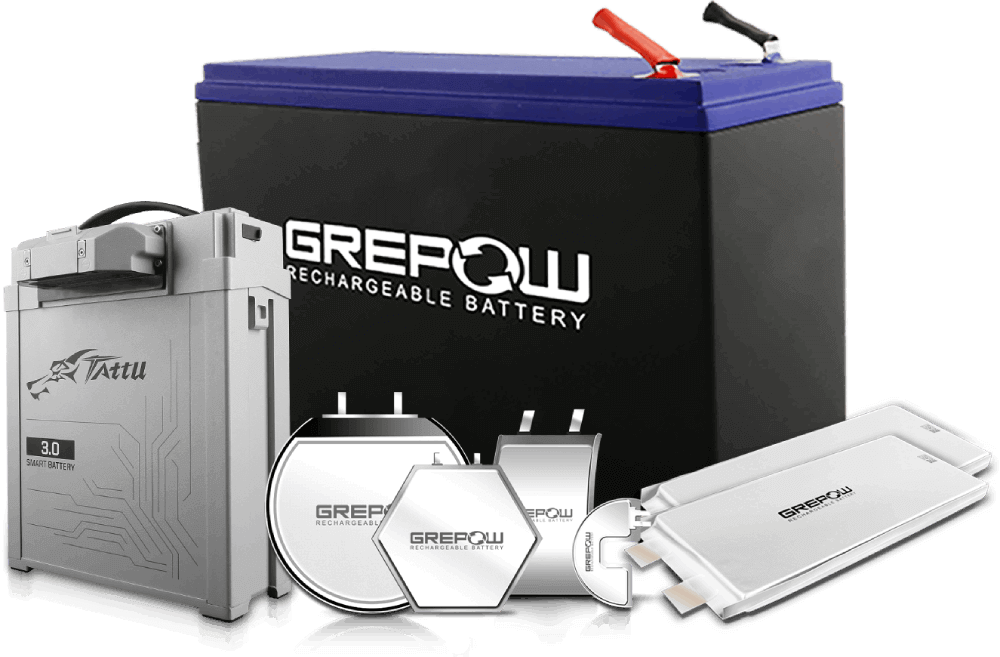

Grepow batteries


The company is devoted to providing a fully integrated and one-stop battery solution to power a wide range of electronics. Their special-shaped batteries, proven to deliver good durability and reliability, are designed in a variety of shapes and thickness according to the size, weight, and unique shape of their clients’ products.


More information about Grepow can be found at https://www.grepow.com/


For more information:


Grepow Battery Ltd.

Email: info@grepow.com

China HQ: +86-755-88376378

USA branch: +1-925-364-7166

Germany branch: +49-(0)218-25700755


EnergySquare

energysquare.co

Email: contact@energysquare.co


The Article from: https://www.grepow.com/article/detail/grepow-announce-partnership-with-energysquare.html

2020年8月19日星期三

Lithium-ion battery vs lithium polymer battery

 Nowadays, portability is considered to be a vital part of most of the electronics. This has given rise to the production of many new types of batteries. Some of them are good at one thing while others are good at other things. Some of them are very dangerous too. That is why there are rules for every type of battery for using, carrying, and transporting them.

Here we will discuss two of the most popular types of batteries in the world. This will be a comparison between the lithium-ion and lithium-polymer batteries according to their specifications and differences. In the end, we will also share information about transporting these batteries in planes.

Is a Lithium Polymer Battery a Lithium-ion Battery?

Due to the similarity in the names, many people are confused about this. No, these are not the same as the lithium-ion battery is a completely different thing from the lithium-polymer battery. There are many differences between these two types of batteries. These differences are discussed below.

Difference in Energy Density.

This is the greatest difference between these two batteries. Energy density is the charge that a battery can store according to its weight. The lithium-ion batteries are great in this because they have very good energy density that means that they can store huge amounts of power in them?

Whereas the lithium polymer batteries have a very lower energy density as compared to the lithium-ion batteries.

Difference in Cost.

Cost is another factor that sets these two different types of batteries apart. It is a very interesting fact that despite the lithium-ion batteries having a battery energy density, they are still cheaper. The lithium polymer batteries are usually 30% more expensive than lithium-ion batteries.

Difference in Weight and Structure.

In the field of structure of the batteries, the lithium polymer batteries are better. This is because they are very lightweight, and their enclosure is a little bit soft. Another factor is that these batteries can be constructed in a low-profile style. This increases their cost. On the other hand, the lithium-ion batteries are usually bigger and harder.

Difference in Security Features.

The security of a battery is a major concern for many producers and consumers. The lithium-ion batteries are prone to exploding in bad circumstances because the two different materials in these batteries can easily meet. The lithium polymer batteries are very safe as compared to lithium-ion batteries because their electrolyte is not as prone to leakage.

Difference in Lifespan.

The lifespan of lithium-ion is comparatively longer than that of the lithium polymer batteries. And there is no memory effect in the lithium-ion batteries as well. But the lithium-ion batteries lose their storage capacity with time.

Which is Better, Lithium-ion Battery or Lithium Polymer Battery?

This is another very popular regarding the lithium-ion and lithium polymer batteries. Both of them are very popular and this is what makes people get confused. But none of them is perfect in one way or another. Both of these batteries have their pros and cons. One way to select which one is better is that you know and evaluate the batteries according to your needs.

Here we will enlighten some points that will help you in deciding which battery is better for you.

What are you Going to Use the Battery For?

This is the most important thing that you need to consider when selecting a battery. If you are using the battery in a product that requires an adequate power delivery but does not care for the delivery time, then you might prefer the lithium polymer battery. This is because these batteries have a low storage capacity, but they can provide adequate power.

If it is needed to provide the power for a longer time, then you may need the lithium-ion batteries because they can hold more charge.

Are you Concerned About the Size of the Battery?

If the size of the batter is one of your major concerns, then you can select lithium polymer batteries because they are also available in low profile enclosures.

Is Cost a Concern for You?

When cost is a major concern, then it is good to select the lithium-ion battery because it is easily available at comparatively cheaper rates.

If you are replacing the battery from an old product, do you know which battery it used before?

If you are replacing a battery, then you should use the same battery that was used before.

Can You Take Lithium Polymer Batteries on a Plane?

Taking the batteries with you on a flight is another problem of major concern throughout the world. This is because of some of the past incidents where the batteries were the cause of an explosion or a fire on the place. The batteries are allowed to be taken with you on a plane only under special circumstances. Some of those circumstances are discussed here.

The Batteries in the Electronics.

If you are carrying any type of electronic item that has a battery. Then you must keep this device with you in your hand-carry storage. Another thing to notice is that the battery must not be more than 100-watt hour. Otherwise, that device will not be allowed to be taken on a flight.

Separate Batteries.

In case you are keeping spare batteries with you, then you have to follow some rules as well. The batteries cannot be any bigger than 160-watt hours. You also have to add these batteries with you on the flight.

Can the Batteries Be Checked in with Your Luggage?

No authorities allow you to keep the batteries in your luggage because there is a chance of having an explosion or a fire due to the batteries.

Rules for carrying the batteries in the plane.

  1. In any case, the battery will be in your hand carry.
  2. The spare batteries must be protected at their terminals so that they can not cause any sparks.
  3. You must use separate plastic containers, an efficient amount of electrical tape, or a professional battery barring case to carry batteries with you on a plane

Conclusion

We hope that this was more than enough to make any of your confusion clear regarding the two most popular types of rechargeable batteries. By reviewing the differences and specifications of the batteries, you can make your buying decision efficiently.

2020年8月4日星期二

Innovative Interesting UAVs

The next “big thing” is always in the spotlight in today’s society.  Many companies now prioritize how their devices will stand out among the standard items in the market, so there is an abundance of innovative UAVs for consumers.


We will explore some of these new and interesting drones that break conventional styles.  These drones may be in the market or still in production.

Mini RC Folding Ball Drone

Creative Mini RC Folding Ball Drone

These drones are in the shape of a basketball or football, and they unfold while flying.  They come equipped with a 480/720P HD camera and a  built-in 3.7V, 800mAh battery.  Their fly time is about 5 to 6 minutes.  When folded back into shape, the drone comes to be 10 x 10cm in size, and it is easily controlled with WIFI.

Hand- Controlled mini drone

Hand- Controlled fly mini drone

This hand controlled mini drone is a new version of the mini quadcopter, and it is specially designed for kids. It has 4 powerful rotary motors to provide power with 360° rotational flying.  If the user doesn’t operate the drone for 1-2 seconds, the aircraft has a function where it will descend a little and hover again. It also has a built-in rechargeable Lithium battery that only needs 40 minutes to fully charge, and its flight time can be up to 5 to 8 minutes.

Poweregg Drone

Poweregg drone

It’s a bird!  It’s a plane!  No, it’s an egg.  PowerVision developed a unique egg-shaped UAV that transforms into  a flying machine and can revert back to its original shape with the touch of a button.  It is equipped with a 350 degree, 4K camera and a 3-axis frame.  Its features include optical flow sensors for indoor flight, live video transmissions, and many other functions for high-end photography.

Drone for Ocena Garbage

Clean Up Oceans Garbage Drone

Elie Ahovi, an Industrial Design student at French International School of Design, heads a project where a drone is used to clean up the ocean and its garbage.


It is in the shape of an oversized pool net with a sensor. it works with several other drones to look for waste and uses a special sensor to keep away fish and other aquatic animals. It is equipped with an infrasound system, and its high-powered batteries allow it to stay in the water for more than 2 weeks at a time.

Indoor Photogrammetry Spherical UAV

Indoor Photogrammetry Spherical UAV

Flyability Elios 2 is the most intuitive, reliable, and precise indoor inspection drone. Using cutting edge to capture data, it conducts flawless inspections to protect personnel from harm. The spherical UAV features an unobstructed view, powerful lighting, stabilization sensors, and all-round enhanced productivity.

3-in-1 RC QuadScout Drone

3-in-1 RC QuadScout Drone

This drone has multiple functions: it can fly, drive, and crawl down, sideways, backwards, and even rotate  360º. This awesome 3-in-1 drone has an on-board camera that snaps photos and records video while in-flight up to 150 feet away! It also is easy to fly – kids just toss to launch it – and features a crash-resistant design with motion-sensitive auto stabilizers for greater control. When converted to car mode, it can even crawl up walls!

V-shaped Bicopter

V-shaped Bicopter Drone

Despite the vast majority of drones using four rotors, the new V-Coptr Falcon from Zero Zero Robotics utilises only two. Most consumer drones offer a flight-time of 30 minutes or less, but the V-Coptr can fly for up to 50 minutes. The technology also reduces propeller noise, and the drone’s 12-megapixel camera promises high-quality still pictures and 4K video at 30 fps.

Rocket Drone

Radical Rocket Drone

The Radical Rocket is a ducted-fan UAV designed and built in four weeks by Ex-RAF Electronics Engineer Lee Molyneux during the Covid-19 pandemic. It uses a 3S, 5000mAh, 120C battery.

Do these drones impress you? Please feel free to leave a comment if you have other UAVs that you would like to share.

About us

Grepow is a battery manufacturer that specializes in the research and production of NIMH, LiPo and LiFePO4 batteries, as well as the development of power management systems. After decades of development, Grepow is now one of the largest manufacturers of high C-rate and high capacity batteries in China.

Grepow particularly has a great reputation for UAVs and FPVs under one of its brands, Tattu.  We have been involved in all sorts of UAV projects, and we have provided professional battery solutions for our customers.  If you are interested, please email us at info@grepow.com

2020年7月20日星期一

RC Car Batteries: Introduction, Cycle Life, And Care

Article citied: RC car batteries
Lipo Batteries often abbreviated as Lithium polymer batteries are rechargeable batteries that use polymer electrolytes instead of liquid electrolytes. RC cars are the popular market of LiPo batteries, you will be needing batteries for running them and LiPo batteries are the best option. They are best known for maintaining a steady voltage, surpassing all its other competitors.

What is the Best LiPo Battery for RC Cars?

All batteries are the same and identical, but that's not true. They may look identical and share the same capabilities and compatibilities but they are different, in terms of quality and performance. Choosing the right one for your battery can be a task but here we are with guidelines that will help you in opting for the best one.
The best tip is that do your research and testing before the purchasing. Different brands will have different price tags and you must be ready to invest some money in buying them. Don't buy a cheaper one that can later be heavy on your pocket but don’t buy an expensive one either. Some brands with low prices also offer good quality batteries that will last you longer than the expensive ones. So, the cost cannot determine the quality of the battery but its performance does. Make sure to do independent testing, consider battery configuration, and check the connectors as well. Also, make sure to check the reviews.
Related Read:

Gens ace RC car / boat battery

How Long does a LiPo Battery for RC Cars Last?

LiPo batteries come with a lot of advantages but it has a shorter lifespan if compared to the nickel batteries. A LiPo battery may last typically fr about 150-300 cycles that totally depends on how it is cared for. Just when you will start using your battery frequently, charging and discharging it, it will ultimately be losing its capacity. You take your battery of 1300 mAH out of the box, but it will drop upto 75%, menaing about 1000 mAH.
A 1000 mAH battery bearing a load of 500 mAH will last for about 2 hours. Similarly, if your load is 2000 mAH then it would only last for 30 minutes. A 5000 mAH battery is quoted to last for about 20-25 minutes depending on the driving speed and your driving habits.
However, there are several methods that you can do for making our battery last longer. It includes the usage of proper charge voltage and balanced charging. Do, all the things that are necessary for maintaining the LiPo batteries for RC cars and you will definitely be treated with good and satisfactory outcomes.

How do you Care for your LiPo Battery for RC Cars?

Generally, good care and maintenance are required for LiPo batteries as they are a little too sensitive demanding some extra attention and care. But you can just ignore them for the fact that they need care because they are giving you a bundle of pros as well, including the lighter weight, higher capacities, higher discharge rates, and much more.
Here are some of the tips that will lead you to a better performance of LiPo batteries of RC cars.

Compatible Charger

Not just for increasing the lifespan, compatible chargers for LiPo batteries are the first thing that should be taken care of. If you are using a non-compatible charger you are not fully charging your battery, increasing the safety risks, and also contributing to shortening the life of the battery.

Effective Charging

It is advised to not over-discharge your battery and store the battery fully charged. do not overcharge your battery past 4.2 V per cell. Using a compatible charger will also help you in keeping the voltage and current same until it reaches the peak. Make sure to charge it as per instructions. Don't charge them at below freezing point or near the flammable surfaces. Also, ensure that your battery is not damaged, broken, or swollen.

Discharging

Do not discharge your batteries more than amperage rates specified on the labels. Discharging the battery low than 3V can lead you to some consequences. Also, ensure that your battery doesn't exceed the temperature of 140F during the discharging process.

Storage

Extra Care and attention are needed even in the storage of LiPo batteries. If you are storing your battery fr more than 30 days or planning to leave it as it is for a month or so, do not leave your battery fully charged. Make sure that you are not storing loose batteries together. It’s also recommended that you should not store your battery at extreme temperatures, near the flammable surfaces or in the direct sunlight. Always disconnect the batteries that are not in use and store them in a non-conductive fireproof container as it is really necessary to prevent any unwanted consequences. Improper storage is the most common problem that occurs with LiPo batteries.

Disposal

It's really important to dispose of the LiPo battery properly as it can be a hazard. If you are having a bad day with LiPo batteries then dispose of them in the bins after completely discharging them, and checking the voltage of them. Place the LiPo in a saltwater bath and it will short out the battery, then check the voltage and then dispose them of.

General Care

Don't disassemble the cells, never dispose of them in fire or use them near flammable surfaces, avoiding the opening and deforming of cell, avoiding them to not get hit or bend or striking them with sharp edges are a part of some general care that should be don while handling the LiPo batteries for RC cars. You can also use a fire-resistant container to keep your batteries and yourself safe and sound.

2020年6月27日星期六

Best Battery Manufacturer in China

The global battery market is growing constantly, and competition between manufacturers is expected to intensify with the introduction of new and advanced technologies and higher investments in the market.
Out of all these companies, we will explore the top 5 battery manufacturers in China.

CALB

With headquarters in Luoyang, China and more than 2,000 employees worldwide, CALB is a large, nationally owned enterprise. It provides products for renewable energy storage, transportation, wind and photovoltaic energy storage, telecommunication, mining equipment, and rail transportation markets. Its products include lithium-ion batteries featuring large capacity, long cycle life, high power density, low self-discharge rate, and low temperature performance.

BYD

BYD was established in 1995, and its headquarters are in Shenzhen, China. The main products are lithium iron phosphate power batteries and lithium-ion polymer batteries. BYD announced in 2018 its plan to quadruple its manufacturing capacity before 2020. The clients of BYD include top consumer electronics brands such as Samsung, LG, Huawei, Lenovo, ZTE, and TCL.

Shenzhen BAK Technology

Founded in 2001, Shenzhen BAK Technology Co. Ltd is mostly known for its lithium-ion polymer  and LiFePo4 batteries. It manufactures and exports various types of rechargeable batteries. Around 75% of their products are exported globally while the rest of the 25% is sold within China. The company has subsidiaries in Europe and India and has set up offices in the United States to support an extensive domestic market.

LARGE

Dongguan LARGE Electronics Co. Ltd. was established in 2002. It focuses on lithium-ion-battery module research, development, production, and sales. The company’s main products are power supplies, power-storage power supply, industrial power supply and other consumer power supplies. It has grown to be a leading lithium-ion battery provider with customizations.

Grepow

Shenzhen Grepow Battery Co., Ltd. was founded in 1998. It is an advanced technology company that specializes in the research and production of NIMH, Li-PO batteries, and LiFePO4 batteries and development of power management systems. After decades of development, Grepow is now one of the largest manufacturers of high C-rate and high capacity batteries in China. Its sales network covers all areas of China, most areas of Asia, Europe, America, Austria, and some areas of Africa. We have established offices in Xinjiang, Germany, and U.S.A. to provide better service to customers for delivery efficiency and after-sales service.
The battery manufacturers in this article are in no particular order. In fact, there are many other battery manufacturers in China who contribute to the further development and research of batteries.

You may also like:

2020年6月9日星期二

Top Drone Parts Companies

Article source: Top drone parts companies

1. Drone Electronic Speed Controller (ESC)

ESC stands for Electronic Speed Controller, and they control the speed of the motors in drone. The ESC receives throttle signals from the flight controller, and drives the brushless motor at the desired speed.
There is a working current on the label of ESC, such as 20A, 30A, etc. This is the maximum continuous working current of ESC, and if it continues to exceed the current, the ESC will burn out. When the multirotor drone is moving at high speed or hovering in a windy environment, the working current will be greatly increased. Therefore, we should try to select ESC with larger working current than normal’s when the price and structure space permitted.
Also, ESC has internal resistance, the heat dissipation performance should be paid highly attention to when choosing a suitable ESC.
Using good quality ESC will for sure bring you with a reliable and smooth flight experience.

* ESC company Recommend: HOBBYWING


HOBBYWING is dedicated to developing and manufacturing different brushless power systems (motors & ESC) and relevant electronic devices for RC cars, boats and aircraft for all players.

2. Drone Motors

The motor is an essential part of the power system of UAV.
The continuous maturity of brushless motor technology is also an important technical basis for UAV industry. Compared with brush motor, brushless motor has the advantages of high efficiency and lifespan.
A motor is indicated by 4 numbers like 2207 or others. It 27 shows the diameter and (07)shows the height of the rotor in millimetre (mm). The bigger the motor gets, the higher the thrust it can generate.

KV represents the speed at which the motor rotates for every volt applied to the motor. The value of KV is multiplied by the voltage equal to the idle speed of the motor (revolutions per minute).

* Motor company Recommend: T-MOTOR


T-motor is a brand which specialize in UAV’s propulsion system, with full coverage-product line of components from light weight FPV racing motor to heavy lift brushless motor, carbon fiber propeller ESC, the whole propulsion system, which also set the standard in the UAV industry.

3. Drone Battery


The battery is also one key part of the drone, the main drone power battery type is Lithium Polymer battery (LiPo Battery) on the market, compared with other battery type, lithium polymer battery has higher energy density, higher discharge Rate and better performance. lithium polymer batteries are made of several cells in series or parallel, normally, every single cells has a standard full voltage of 4.2V and a rated voltage of 3.7V.
Intelligent battery is specially designed for UAV drone. What’s the difference? Smart battery with a built-in Battery Management System(BMS) which could have functions as below: balance the charging protection, charging temperature protection, Over charge/discharge protection, short circuit protection, SOC Indicator, battery daily record, charging temperature protection, over-current protection, etc...

* Drone Battery Company Recommend: GREPOW

Grepow is the Leading Global Professional Customize Battery Manufacturer, HQ founded in 1998 in China and now has two branch both in USA (www.genstattu.com) and EU(www.gensace.de)
Specialized in the research and production of NIMH/LIPO/LiFePO4. Grepow possesses the tech from cell design, structural design, BMS design to pack design.

4. Charger

Lithium Polymer battery (LiPo Battery) is usually charged by the charger with balance function, which will automatically adjust the charging voltage of each battery cell to get maximum consistency.
This is also the safest and most common used charging way on the market.

* Charger company recommend: Sky RC


Sky RC, established in 2008, specializing in chargers and power supplies, providing the highest standards in both product expertise and customer service. They are well known for iMAX B6AC charger which is the most common charger used in the RC hobby industry at the beginning. Of course, for drone battery charger, EVPEAK is also worth knowing, they focus on dedicated charger for uav, intelligent balance charger and so on.
Need more information, please email us: info@grepow.com

2020年6月3日星期三

Drone Delivery

Work cited: Grepow news — Drone Delivery
There have been some exciting announcements in the world of drone deliveries lately. The announcements come more from the FAA than from the tech companies, as there have finally been drone deliveries in the United States.
Is this the beginning of crowded skies delivering our food, drone parts and new socks, or is this just a fad? You and I know drone deliveries can be a sustainable technology, and obviously companies like Amazon, Google and USPS think the same.
The pros and cons of drone delivery are worth our attention.

What is Drone Delivery?

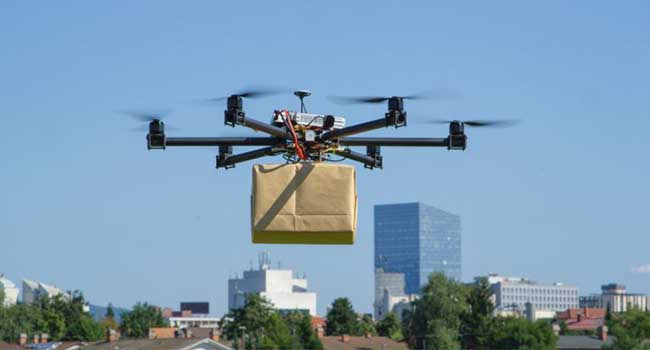
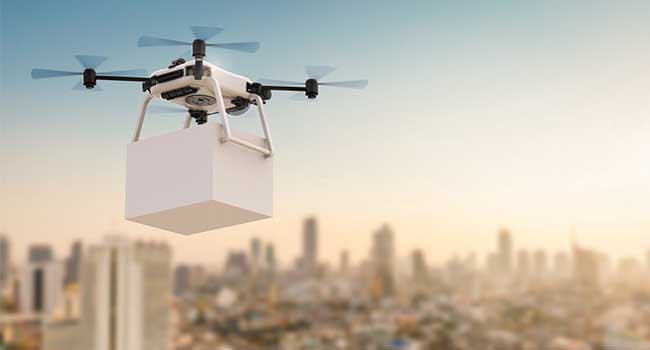
Delivery drones are unmanned aerial vehicles (UAVs) that can deliver lightweight packages. Drones generally use 4-8 propellers and rechargeable batteries to provide thrust and attach packages underneath the body of the drone.
Delivery drones are operated autonomously or remotely with operators potentially overseeing multiple drones at once. Delivery drones are used for medical goods, food, retail, or even deliveries that can be difficult to achieve through more traditional vehicle-based services.

Possible benefits of drone delivery

The purpose of a delivery drone is to provide services for delivering objects or commodities rapidly and in hard-to-reach or out-of-the-way locations. They can deliver products quickly to virtually any location.
Drone delivery companies can save money on shipping costs, which would in turn reduce costs for consumers.  Furthermore, a drone would not add to roadway congestion due to less vehicle miles traveled (VMT), and there would be improved safety for the driver of the vehicle.
Consumers would also receive their packages far more quickly and reliably, which would build consumer trust and encourage repeat purchasing.

Possible Limitations of drone delivery:

Drone Battery Life

One of the limiting factors for drone delivery has been battery life. High-quality drones usually can stay in the air for about 30 minutes, and the longer a drone has to recharge, the less packages a fleet can deliver.

Expenses

The cost of adding delivery drones to a company’s services requires a significant investment in the infrastructure of the organization. That’s why there are only a few large businesses that consider using this technology at present. The average price of a drone that can accurately make a delivery can be up to $500.

Privacy risk

Streaming videos to headquarters would allow supervisors to know if a delivery was successfully completed. This technology could help to lessen the risk of theft in the future as well, but there are privacy concerns as drones would likely use GPS and cameras to find homes and deliver packages.

Uncertainty

Irregular and/or unpredictable events, such as weather, wildlife, or vandalism/sabotage, could bring down a drone during a delivery, which could potentially become a safety hazard for those on the ground and/or adversely impact the reliability of drones.

Others

Limited payloads prevent heavier or larger items from being delivered via drone, and designated drop-off locations may become difficult to determine in dense, urban areas.
These are all factors that need to be considered when operating drones for delivery.

Conclusion

It’s just a matter of time until drones have the potential to eliminate the challenges people face every day. Drone delivery is inevitable: when regulations loosen up and the infrastructure is in place, we should expect to see drone deliveries for a variety of purposes. Drones could enable a step change in the availability of everyday items.

You may also like:

More information please email us: info@grepow.com